The DC-DC converter is an essential component of an electric vehicle (EV). This article explores its three primary operating modes:
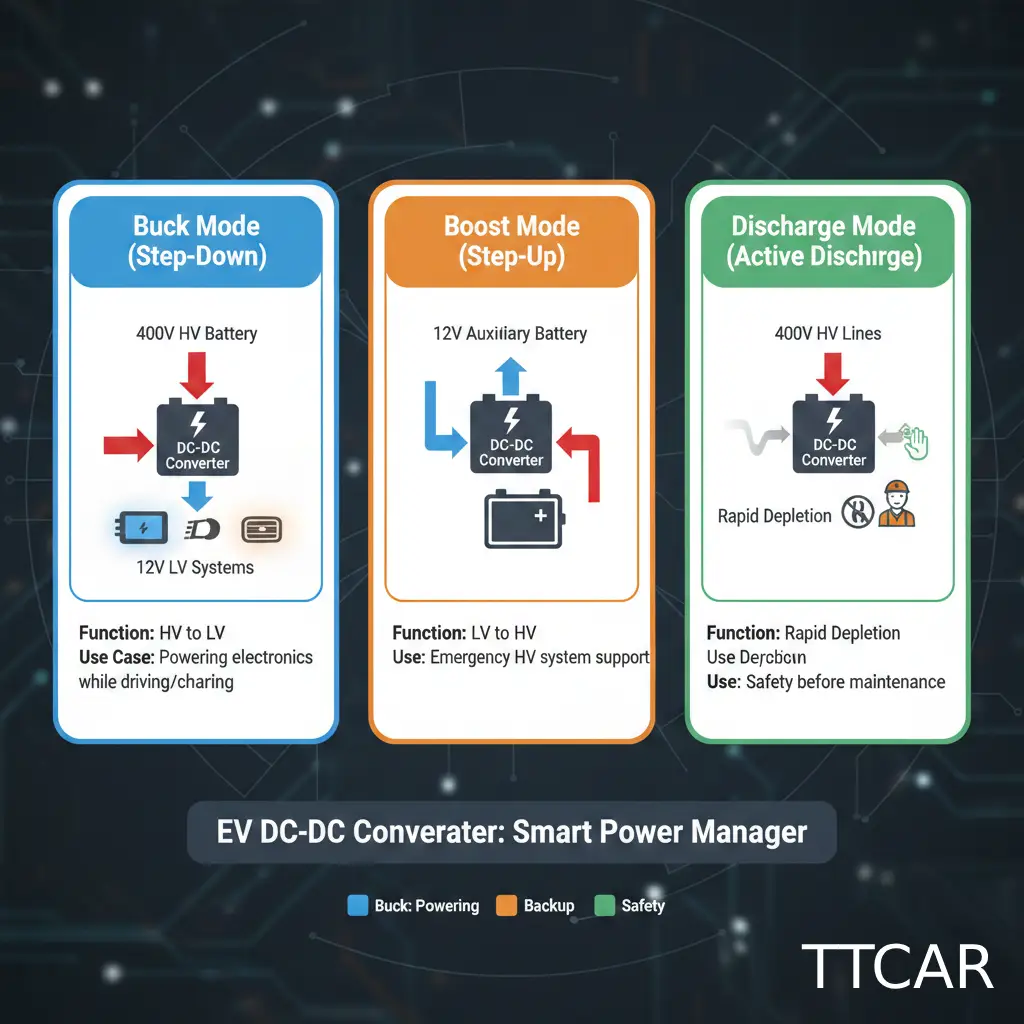
1. Buck Mode (Step-Down)
- Function: Converts high-voltage (HV) battery power (e.g., 400V) into low-voltage (LV) power (e.g., 12V) to power onboard systems like air conditioning, lighting, and infotainment screens.
- Use Case: While driving or charging, the DC-DC converter “steps down” power from the traction battery to support the vehicle’s low-voltage electronics.
2. Boost Mode (Step-Up)
- Function: Converts low-voltage power (12V) into high-voltage power to charge or support the HV system.
- Use Case: In the event of a traction battery fault or specific startup conditions, the converter can boost power from the 12V auxiliary battery to the high-voltage bus (e.g., 400V) to maintain critical system functions temporarily.
3. Discharge Mode (Active Discharge)
- Function: Rapidly depletes the energy stored in high-voltage capacitors when the vehicle is powered down or involved in an accident to prevent electrical shock.
- Use Case: Automatically triggered during maintenance or after a collision to “drain” residual voltage from the HV lines, ensuring technician safety.
Why These Three Modes Matter
| Mode | Core Function | Real-World Example |
| Buck | HV to LV | Charging your phone or running the AC while driving. |
| Boost | LV to HV | Using the 12V battery to support the HV system in emergencies. |
| Discharge | Rapid Depletion | Draining residual voltage before service to prevent injury. |
Summary:
- Buck: High to Low (Powering electronics)
- Boost: Low to High (Energy transfer/Backup)
- Discharge: Clearing the lines (Safety first)
With these three modes, the DC-DC converter acts as the vehicle’s “Smart Power Manager,” ensuring both high efficiency and maximum safety.