The electric car diagnosis is empty
The OBD interface in traditional gasoline-powered cars is mainly used to monitor and report emissions data. However, electric cars are designed to be zero-emission vehicles, so their design and requirements are completely different from those of traditional gasoline-powered cars. Therefore, theoretically, since electric cars do not emit pollutants, an OBD interface is not necessary for direct emissions monitoring.
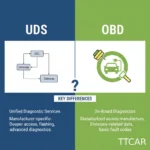
Unlike gasoline cars, electric cars currently lack a unified industry standard for on-board diagnostics (OBD) systems. Existing electric car OBD ports are only used for specialized maintenance communication by car manufacturers, and general OBD interface devices cannot read any information. Some car manufacturers have developed their own solutions for their models. For example, “Tesla OBD” is an application that connects to Tesla electric cars’ OBD ports, reads and displays vehicle diagnostic information, and provides real-time monitoring, statistical reports, and alarm settings.
However, not all electric cars are equipped with OBD functionality, and the way different car manufacturers’ OBD systems work is not consistent. Each electric car manufacturer uses a different diagnostic system, which is quite chaotic. The lack of an industry-standardized electric car OBD system is a nuisance for both consumers and repair personnel. However, everything will change starting in 2026. At that time, electric cars sold in certain US markets will be required to have a standardized on-board diagnostics system. According to the plan, the California《 Advanced Clean Cars II 》(ACC II) regulations will take effect in 2026. As part of these regulations, California will require car manufacturers to gradually install standard electric car diagnostic systems similar to the OBD-II system used for gasoline cars.
California Leads the Way in Standardization
Previously, there was no requirement for OBD or data standardization for electric vehicles, largely because people believed that electric vehicles did not have emissions issues. Now, as California hopes to phase out gasoline cars, it is ensuring that the electric vehicles that will soon become mainstream are equally durable, reliable, and easy to repair. To this end, California is increasing the transparency and uniformity of electric vehicle diagnostic data, requiring standardized data reports for batteries, charging systems, motors, and other components. According to California regulations, starting with the 2026 model year, all zero-emission vehicles, including plug-in hybrids, must be equipped with standardized data sets and diagnostic connectors that can be accessed using a standard handheld scanner, similar to the OBD-II system used for gasoline vehicles.
Of course, creating an OBD standard for electric vehicles is a complex task. The California 《 Advanced Clean Cars II 》 and the SAE International J1979-3 document provide many regulations. According to California’s regulations, certain functions and data, such as speed, odometer readings, charging status, minimum and maximum battery voltages, etc., must be accessible via a scan tool. This access does not require the use of any specific car manufacturer, user, or tool registration, verification, authorization, login, password, certification, or other mechanisms. Not only dealers, but also independent repair shops can access the same information and tools as the authorized dealer network.
The introduction of these standards will further accelerate the healthy growth of the electric vehicle (EV) market. At the same time, they provide consumers with greater peace of mind and more options. As more manufacturers align with these regulations, we can expect a significant boost in product quality and after-sales service. Ultimately, these standards have a profound positive impact on the industry—protecting the rights of owners while driving innovation forward. With the widespread adoption of EVs and continuous technological breakthroughs, we are confident that electric vehicles will lead the way toward a more sustainable and eco-friendly future.